



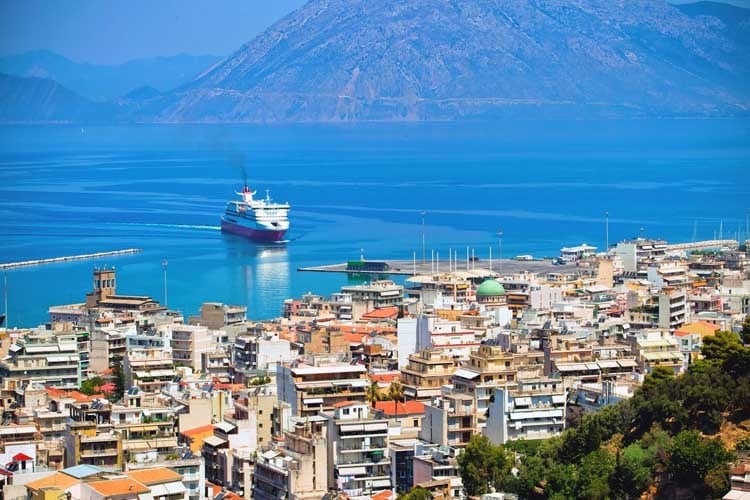
The capital of the prefecture took its name from Patra, who, along with his father, Perveny, was head of the Achaeans of Sparta, who, after being expelled by the Dorians, settled here. The city, formed by the union of three Ionic peoples (Aroe, Mesati and Anthia), did not play an important role until the 3rd c. B.C. The reorganization of the Federation of Achaean cities and the establishment of the Achaic Confederation brought Patras to the fore, which stretched to the sea and presented a remarkable political move. After the Roman conquest, in 146 BC, the city secured the favor of many emperors and experienced a period of prosperity, evolving into a cosmopolitan center. In this he taught and martyred the Apostle Andrew (68 AD). From the end of the 3 rd c. A.D. Patras began to decline and experienced a new period of acne around the middle of the 9th century. A.D. Since then, he has followed the fate of the Byzantine Empire and, after the Turkish liberation, he has developed rapidly. Today it is a transport, financial and tourist center, with a strong intellectual and artistic life, from the most important ports in the country. It is located in the Upper and Lower City, has a proper layout, squares and beautiful gardens, and keeps memories of the past. Patras has 160,400 inhabitants. has a right layout, squares and beautiful gardens, and keeps memories of the past. Patras has 160,400 inhabitants. has a right layout, squares and beautiful gardens, and keeps memories of the past. Patras has 160,400 inhabitants.It is 219 km west from Athens
Menu